External wall insulation can improve the appearance, comfort and thermal performance of suitable properties while creating a fresh rendered finish.
External wall insulation involves fixing insulation boards to the outside of a property and finishing the system with reinforced base coats and a protective render finish. The result is a property with improved thermal performance and a fresh modern external appearance.
EWI can be particularly beneficial for older solid-wall properties where internal insulation would be disruptive or impractical. The system can also be used on commercial buildings and housing stock upgrade projects.
Discuss Your Project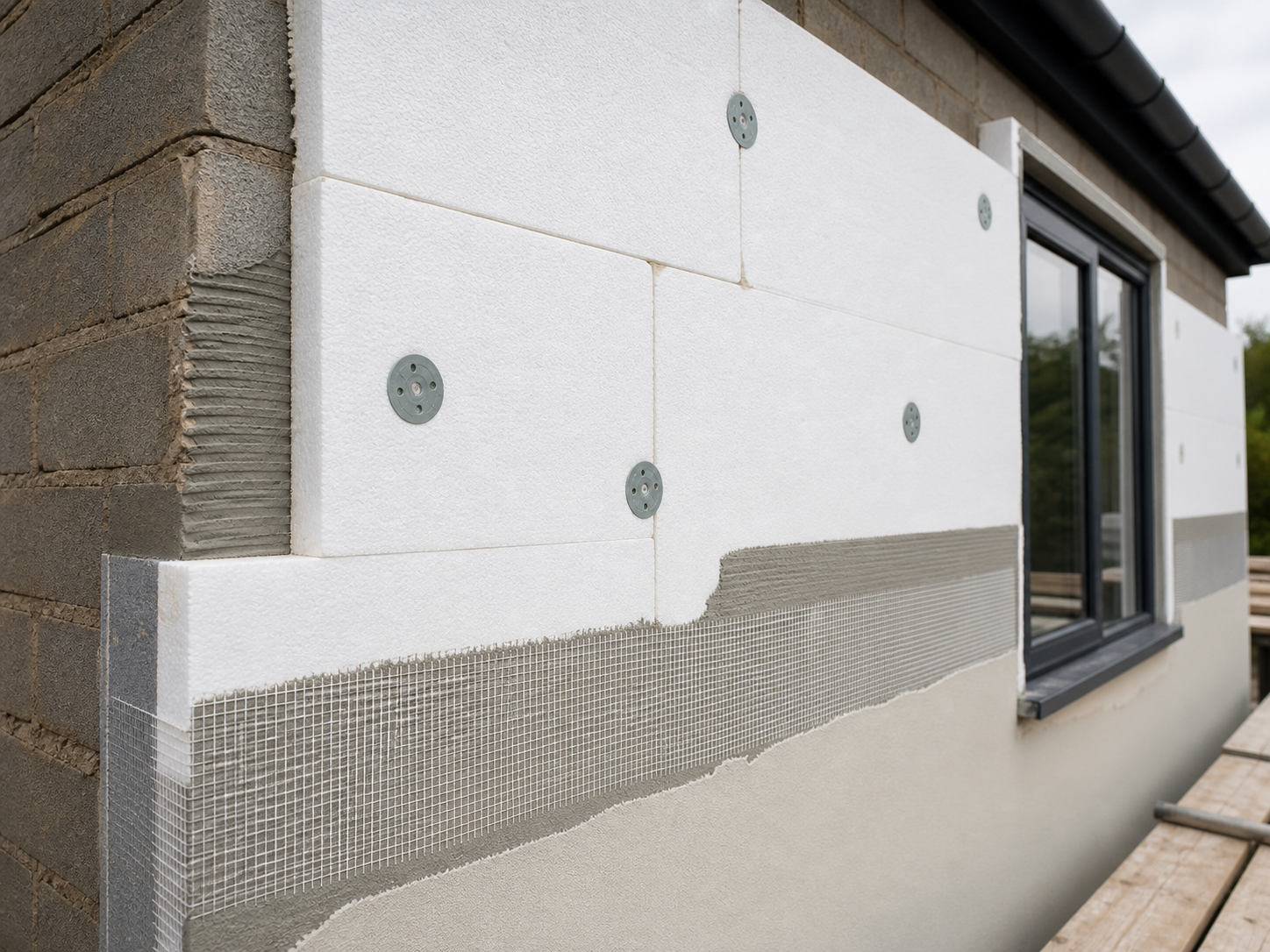
Reduces heat loss through external walls — particularly effective on older solid-wall properties.
Updates the look of a property with a clean, modern rendered finish in a range of colours and textures.
Adds an insulation layer on the outside of the building without disrupting internal space.
The render system protects the insulation and the building from weather, moisture and general wear.
An alternative to internal insulation for older or period properties where disruption would be significant.
Choose from a wide range of silicone render colours and textures to match the surrounding area or preference.
EWI is not always suitable for every property. The condition of the existing wall, planning constraints, property type and budget all affect suitability. We assess each project individually and advise honestly on whether EWI is appropriate.
EWI requires careful planning and assessment before installation. Key factors include:
We review the property type, wall construction, existing condition and suitability for EWI before recommending a system or providing any pricing.
We confirm whether EWI is the right approach and advise on the insulation thickness, render finish and any planning considerations that may apply.
A written quote covering insulation boards, base coat, reinforcing mesh, render finish, trims and all access requirements — fully itemised with no hidden costs.
Scaffolding requirements are agreed and access planned to allow safe, efficient installation across all elevations without unnecessary disruption.
The existing wall surface is cleaned, repaired where necessary and primed for adhesion — preparation quality directly affects the long-term performance of the system.
Boards are fixed using the correct combination of adhesive and mechanical fixings. Trims and beads are installed at all windows, doors and junctions.
A reinforced base coat with embedded fibreglass mesh is applied over the insulation boards to create a stable, impact-resistant substrate for the final render.
The chosen render system is applied to the agreed colour and texture. All reveals, sills and junctions are finished cleanly and inspected before scaffold removal.
Scaffolding is removed, the site is cleaned down and all warranty, guarantee and aftercare documentation is provided at the point of handover.
Yes. We install external wall insulation systems including insulation boards, base coats and render finishes. EWI can improve thermal performance and update the appearance of older properties.
Yes. We work with homeowners, builders, developers and commercial clients on projects of all sizes, from single-room plastering to full commercial buildings.
Yes. Full house rendering is one of our core services. We can advise on the most suitable render system for your property and budget.
It depends on the property type, condition and your finish preference. Common options include silicone thin coat render, monocouche render and sand and cement render. We can advise on the most suitable system during the quoting process.
Share your property details, photos or drawings. We'll assess suitability, advise on the right system and provide a full written quotation covering insulation, base coat and render finish.